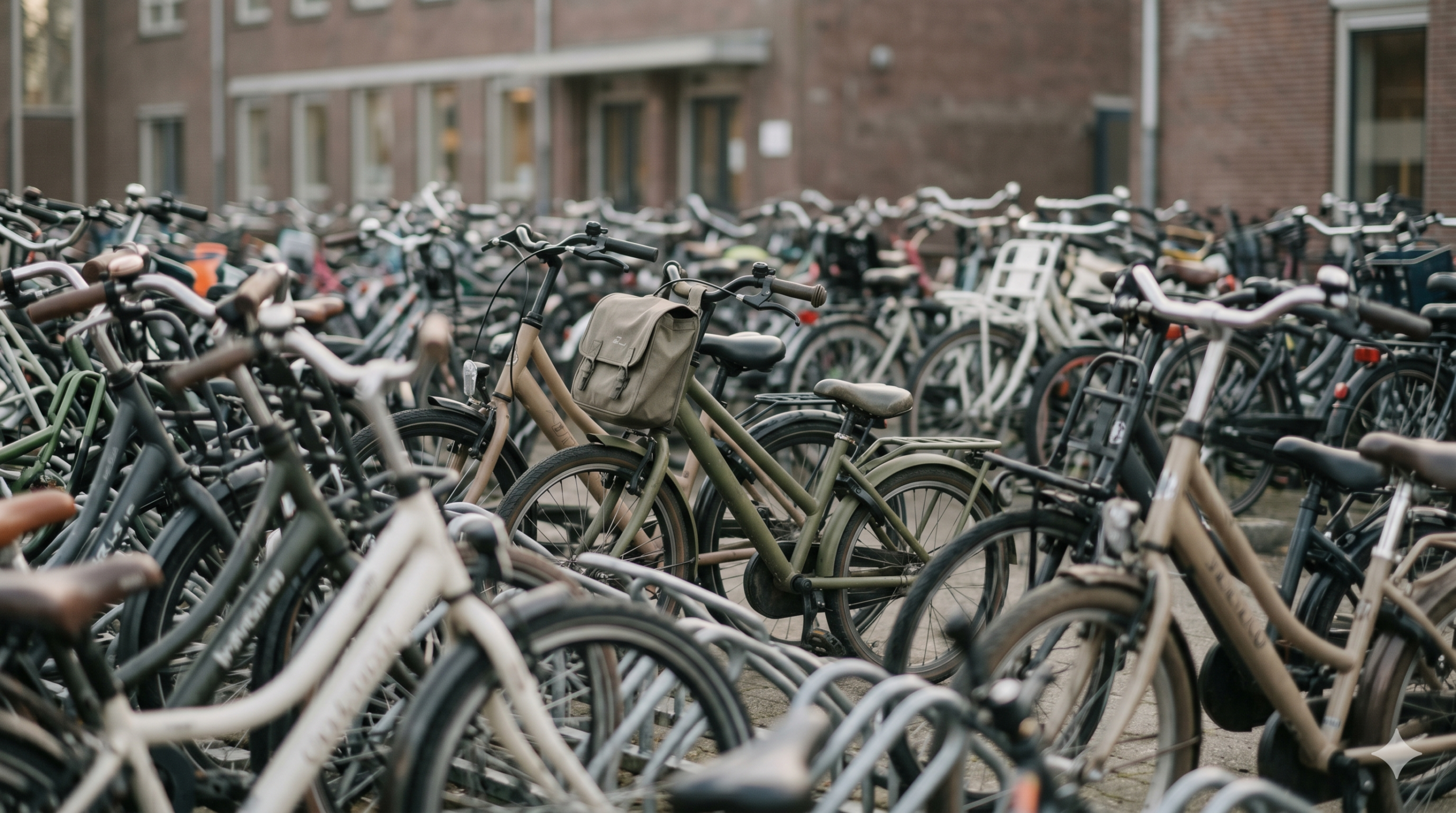
Amsterdam has always been a city of traders — people comfortable with movement, plurality, and the productive friction of different worlds meeting in the same place. That history shapes the creative culture here in ways that are visible if you know where to look.
The city is small enough to be a village and international enough to be a stage. That combination produces something unusual: a creative community that is genuinely connected — where designers, strategists, filmmakers, brand consultants, and researchers actually know each other — but one that is perpetually in conversation with the wider world.
A different relationship with ambition
Dutch creative culture has a particular relationship with ambition. There is a phrase — doe maar gewoon — that translates roughly as “just act normal.” It is often cited as a cultural limiter, a social pressure toward modesty. But in creative practice, we find it functions as something more interesting: a skepticism of pretension, a demand that work actually do something rather than simply announce its own importance.
The best Amsterdam creative work is functional in the deepest sense. It does not perform sophistication. It is sophisticated — in the quiet, confident way of something that does not need to explain itself.
Istanbul as the other axis
Our Istanbul connection is not incidental. Istanbul is a city that lives comfortably in contradiction — ancient and contemporary, European and Asian, skeptical and optimistic. It produces a kind of creative energy that is distinct from anything generated in a purely Western European context.
Working between Amsterdam and Istanbul means thinking between systems. It means having access to two very different ways of framing problems, two different intuitions about what audiences respond to, and two different aesthetic vocabularies. For brand communications work — which is ultimately about translating complex realities into clear, felt messages — that kind of pluralism is not a complexity to manage. It is a resource.
What place gives to thinking
We are sometimes asked why location matters in a world where everything is distributed. The answer is that ideas do not come from nowhere. They come from proximity to other ideas — from the friction of different worlds meeting in the same room, on the same canal, in the same city. Place still shapes thinking. And the places where thinking happens well tend to produce work that reflects that quality.
Amsterdam, at its best, is one of those places. We are glad to work from it — and toward it.